
Reaching for the Stars - Solvents and Paint Films: Sustainable Perspectives in Practice
Auteur: Amelie Ehrismann
Looking back at Gwendoline Fife’s workshop on 9-10 and 16-17 November 2026
Choosing the most suitable solvent - and the most appropriate method of application - is a challenge that almost every conservator faces in their daily practice. Which factors need to be considered when making this choice? How can we identify not only the most effective method, but also the one that is safest for the artwork, the conservator and least harmful to the environment? And, given the many different aspects involved, how can we meaningfully compare solvents, solvent mixtures and application methods?
Gwendoline Fife has developed approaches to addressing these complex questions, most recently as part of her research within the Greener Solvents and Go Green projects (About – Go Green). Her aim is to provide a system that facilitates decision-making, encourages critical thinking and raises awareness of environmental impact as well as the health and safety of conservators. Ultimately, these projects also seek to stimulate further research into alternative approaches and promote the development and use of safer, more sustainable solvents and methods.
From solvent properties to sustainable choices
The workshop was divided into two parts: a theoretical online session and a practical, hands-on workshop.
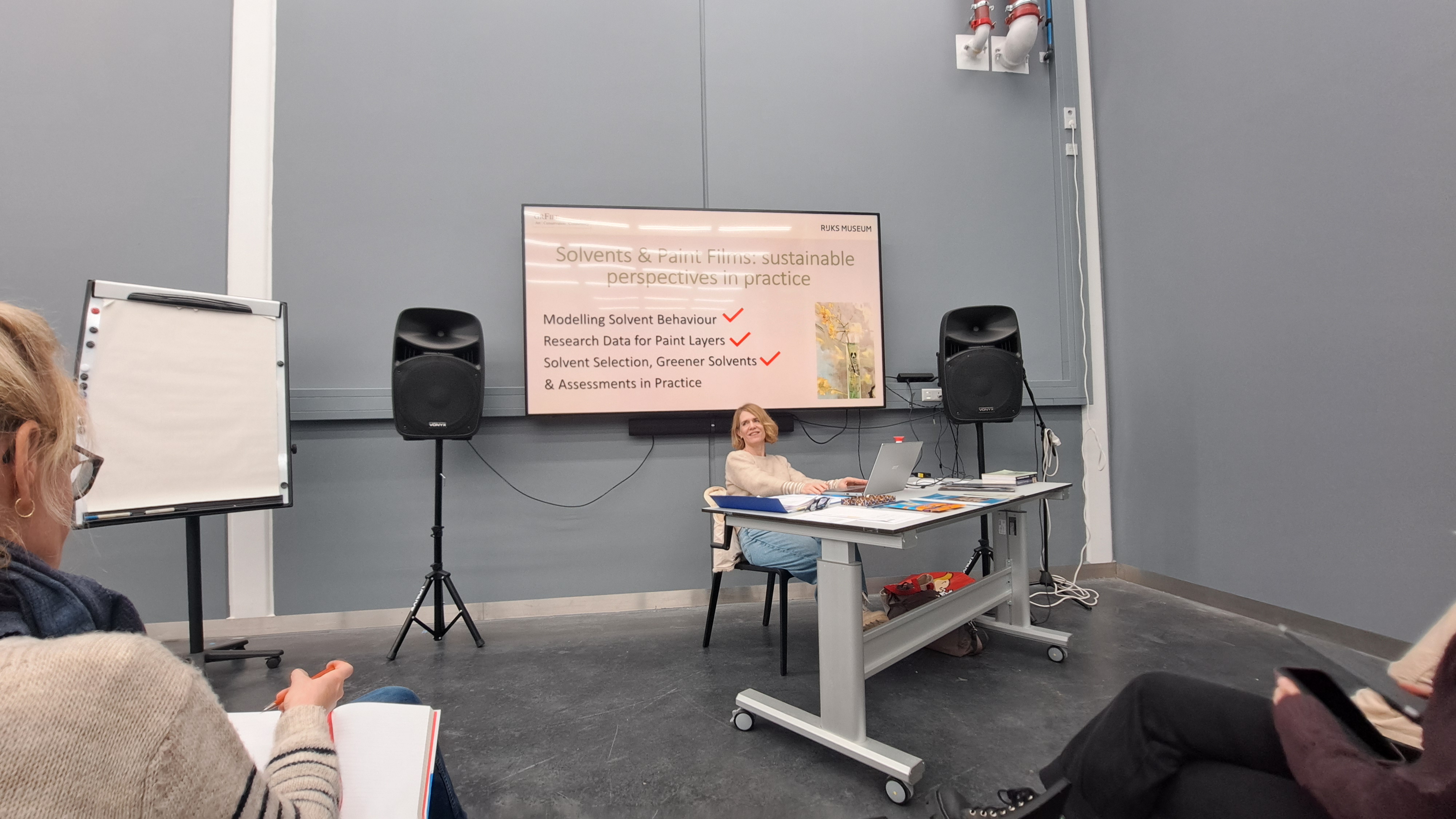
The theoretical session was open to everyone and attracted considerable international interest, with approximately 140 participants[1] . It began with an introduction to the fundamental properties of solvents and the principles behind their interactions with materials. Topics included intermolecular interactions and different ways of representing solvent behaviour, including the simplest TEAS solvent triangle and Hansen solubility parameters. Other relevant properties, including evaporation rates, were also discussed.
The session then moved on to the aspects at the heart of the projects: the environmental impact, health hazards and safety considerations associated with solvents. Among the frameworks introduced were the GHS (Globally Harmonized System of Classification and Labelling of Chemicals) and CHEM21 - Solvent Selection Guide, developed to support the assessment and selection of solvents, also outside of the chemical and pharmaceutical industries.
Together, these approaches provided a broader perspective on solvent selection, highlighting the importance of looking beyond cleaning efficiency alone.
Putting theory into practice
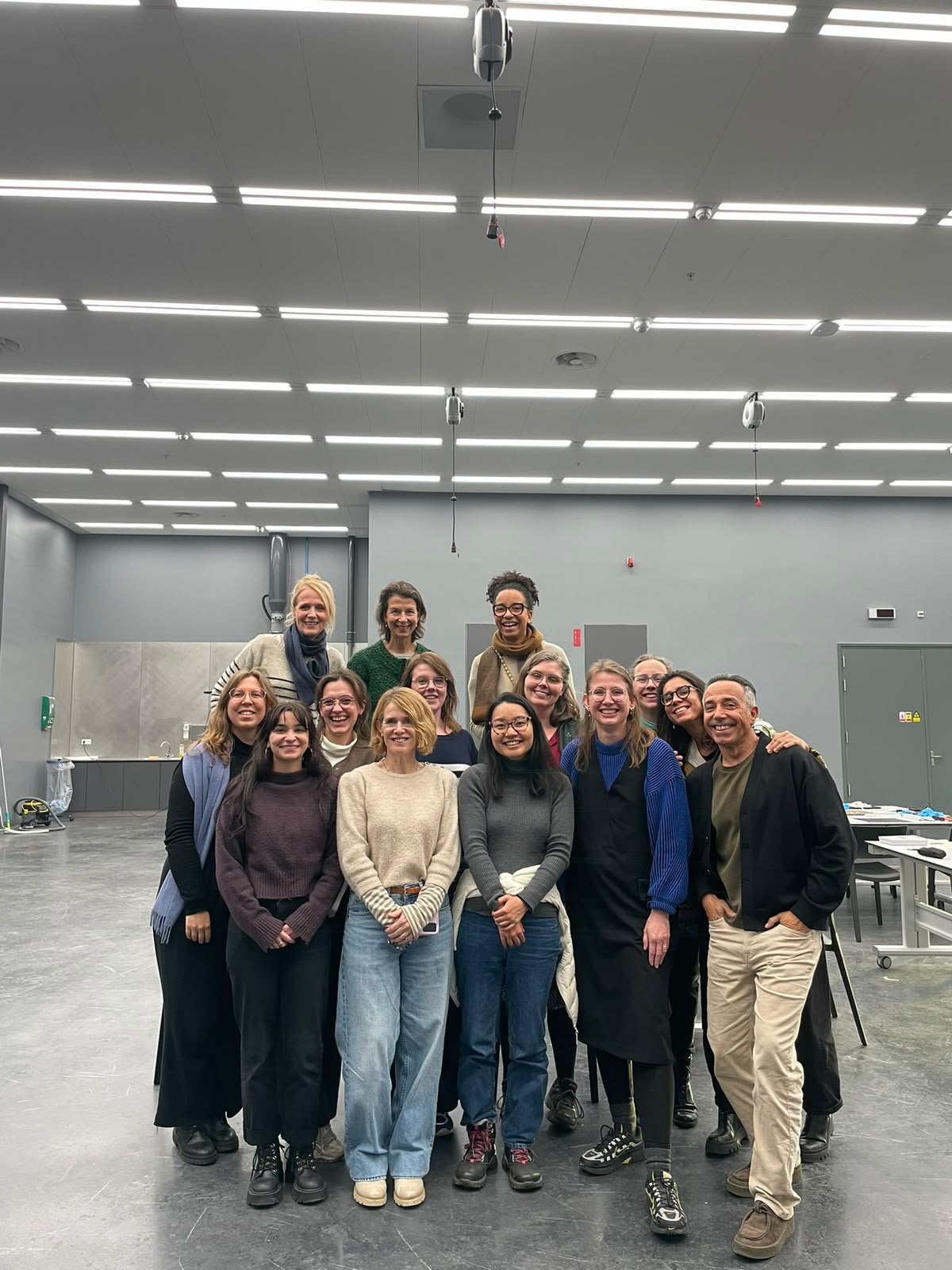
The practical part of the workshop took place on 16 - 17 November at the CollectieCentrum Nederland (CC NL), in Amersfoort, and brought together a smaller group of around 20 participants.
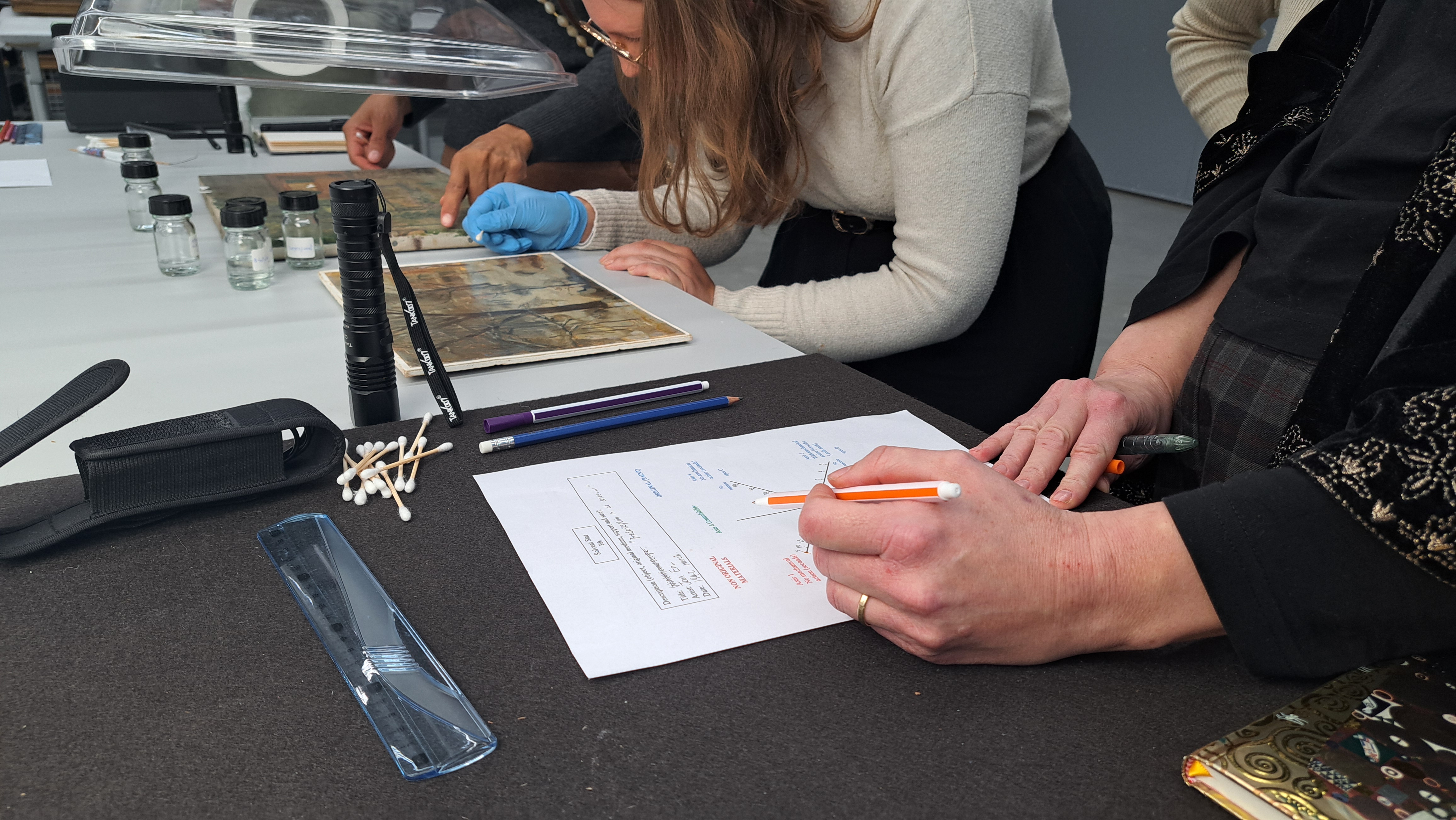
During these two days, a system developed by Gwendoline Fife for assessing and comparing different solvents and methods for varnish removal was tested and discussed in a workshop setting.
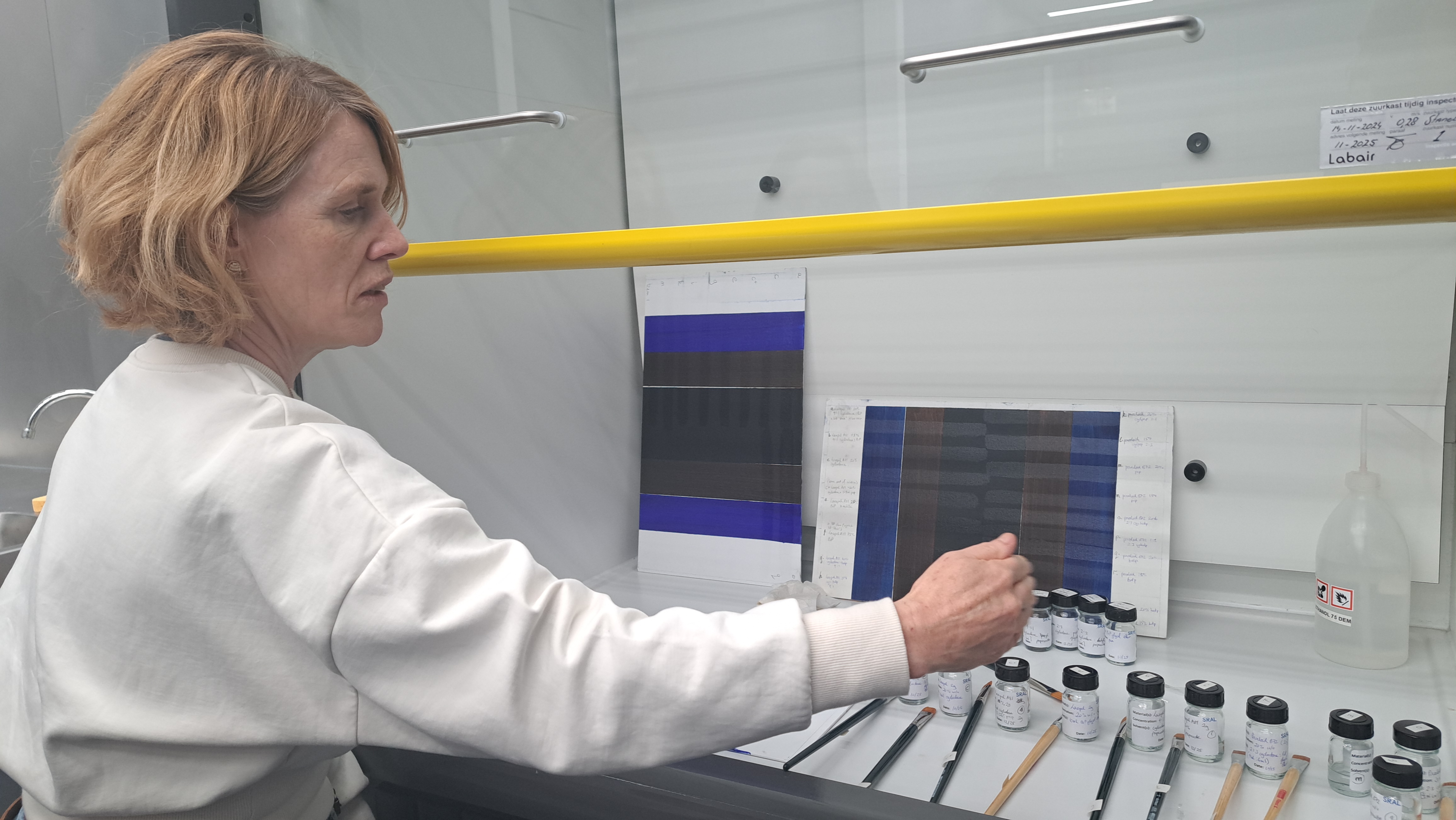
Practical varnish tests were also carried out using Laropal A81 and Paraloid B-72. The resins were dissolved in solvents that could potentially offer greener and safer alternatives to some of the solvents most commonly used today.
Putting the pieces together - and reaching for the stars
As some of Gwendoline Fife’s research is still under development and is expected to be published in the near future, I would not want to reveal too much at this stage. However, one aspect can already be shared: at the heart of the assessments are star diagrams that offer a surprisingly playful way of approaching this complex subject.
These diagrams proved to be excellent tools for stimulating discussion and encouraging new ways of thinking. Working in three different teams over the course of the two days, we essentially pieced together our own stars, exploring and discussing the various factors involved in evaluating potential cleaning methods.
One of the most rewarding aspects of this approach was being able to turn a complex set of considerations into a visually engaging result - one that could easily be compared with the results of other groups. The diagrams made the different priorities and trade-offs tangible, while providing plenty of inspiration for further discussion.
A step towards a greener future
All in all, the workshop was a thoroughly enjoyable and thought-provoking experience. It offered an opportunity to deepen our understanding of solvent selection, exchange ideas with colleagues and reflect on how we can make our daily conservation practice more sustainable.
And what will remain after these two days? Perhaps the satisfaction of having created something together, the inspiration to keep questioning established practices and, above all, the good feeling of having reached for the stars together - in the hope of a greener future for our profession.
Special thanks to Gwendoline Fife for sharing her knowledge and leading this inspiring workshop, and to Bianca Gonçalves, Magdalena Wsół and Jolijn Schilder for organising it.