
The English-Dutch Conservation Glossary
(To view the glossary, click on the link at the bottom of this page!)
Language is not only a form of communication; it can be thought of as the cultural infrastructure that shapes how communities think, work and connect. Culture, we know well as conservators, is a system of shared values, practices, and meanings. People tend to interpret the world through their own cultural lens. Being a foreigner in the Netherlands is a special case - if you don’t want to learn the language right away you don’t have to. The level of English speaking among local Dutch people is so high (at least in the majority of cities) that it can seem as if learning Dutch is not necessary. However, for those attempting to stay and integrate in the Netherlands, there will inevitably come a point when the importance of speaking the language becomes clear, and this is especially relevant in professional settings.
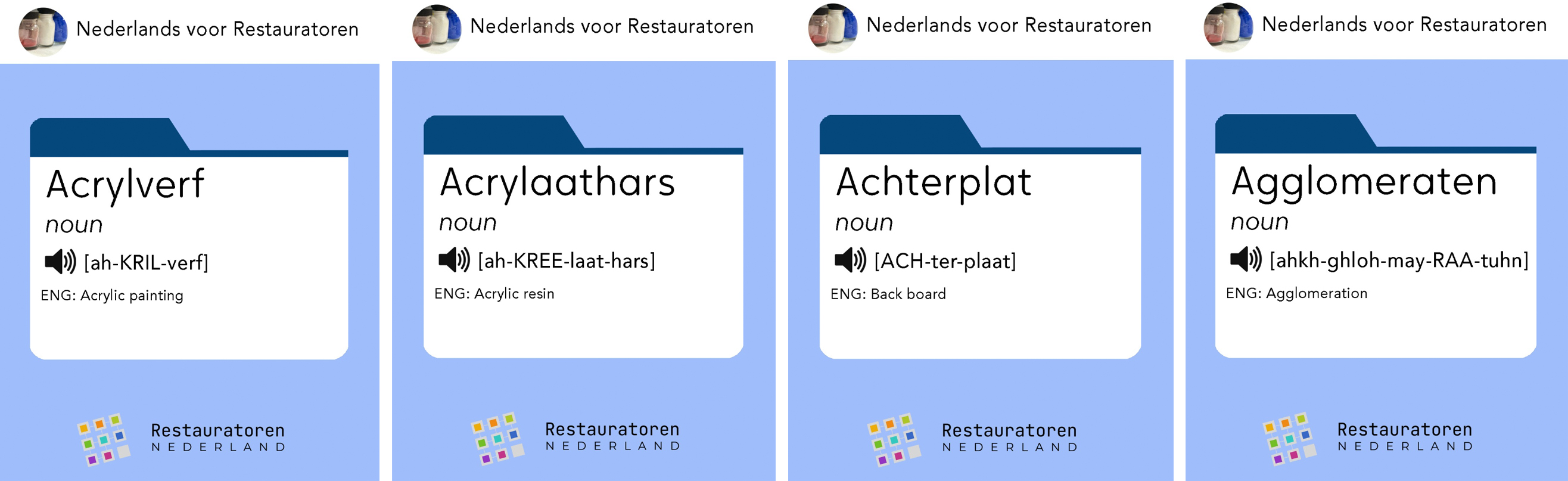
Learning Dutch is one thing, however, when it comes to the conservation profession, language learning tools are not widely available as the vocabulary is very specific. Have you ever tried to input conservation specific language into an online translator, only to be given an awkward literal translation? For years, many institutions and private studios across the Netherlands have compiled their own lists containing conservation specific words and terms in order to fill this void.
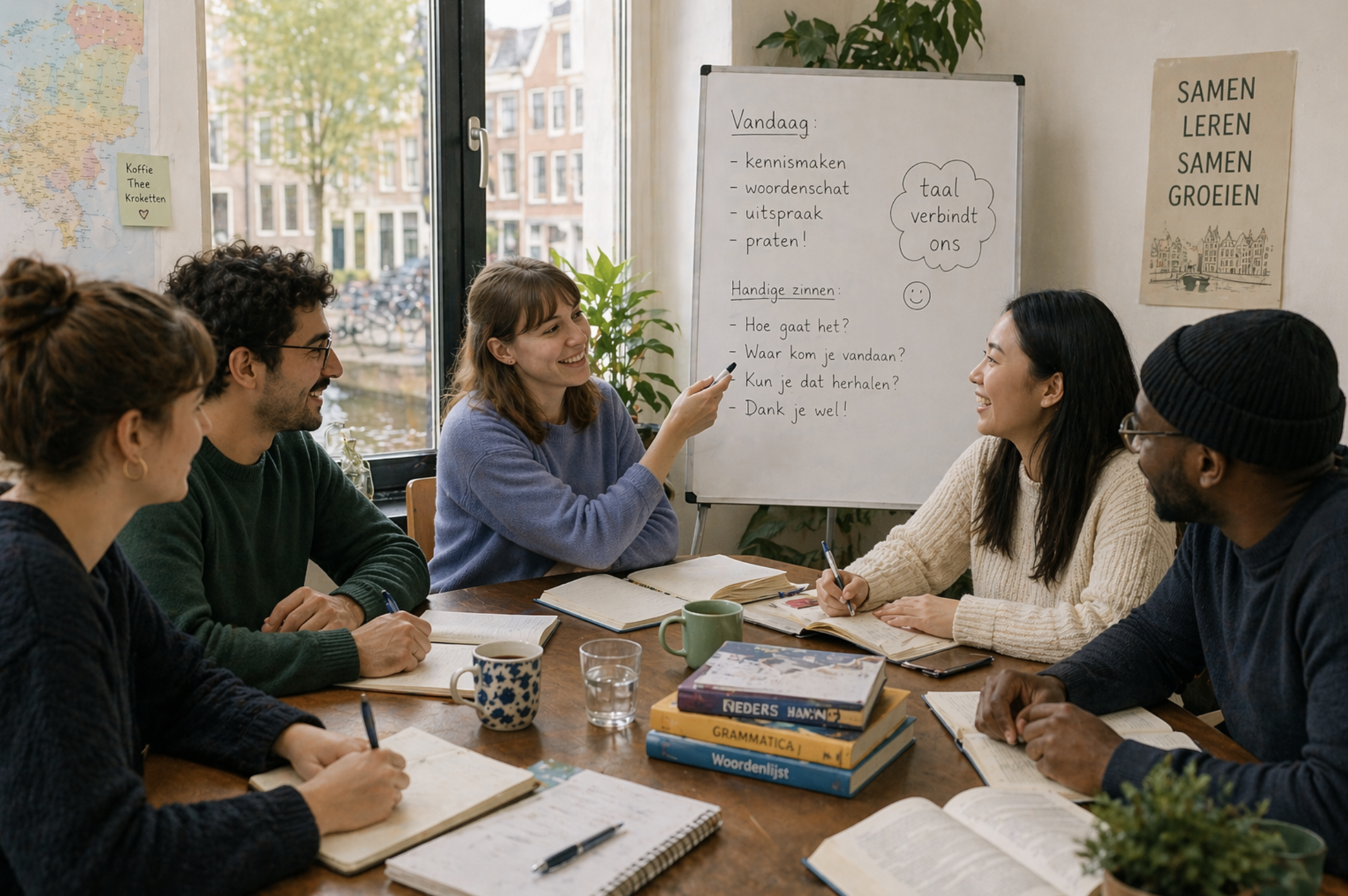
In our profession, the use of correct terminology becomes important when speaking with clients, writing reports, or simply exchanging ideas with fellow colleagues. It fosters practical and effective communication and allows one to be seen as competent and credible in professional contexts. Being familiar with these specialised words and terms also leads to better understanding, enabling one to grasp what colleagues mean with greater depth and nuance. The establishment of this glossary is important as it will allow foreign and Dutch conservators alike to expand and deepen their knowledge of the language with correct professional words and terms. This will help conservators work better and more effectively across languages.
Building on these ideas, the group has also organised accessible Dutch language group lessons specifically tailored to conservators. Last year we offered 3 levels of Dutch language courses comprising approximately 5 people per group. These courses will continue in the following year.
This year the group aims at organising 2-3 meet-ups featuring Dutch tours or group activities (Kroketten Workshop anyone?) that not only will strengthen professional networking but also encourage the active use of technical language in real contexts. And, of course, the highlight of our efforts: the official launch of the glossary’s first edition.
While the group and its ambitions have expanded since its inception, the central aim remains the same: supporting the development and use of professional language among native and non-native speakers of the Dutch language within the professional context of conservation, specifically as part of the RN membership.
If you would like more information about the Dutch for Conservators Group or are interested in joining, please contact us at info@restauratoren.nl
Many conservators working in the Netherlands come from different cultural and linguistic backgrounds. While this diversity enriches our field, it can also make one thing challenging: professional terminology in Dutch.
To help bridge this gap, the Dutch for Conservators Group created a new resource: A shared Dutch glossary for conservation and restoration terminology.
The idea started with a simple need of bringing together terminology that was previously scattered across different institutions into one accessible glossary for the field.
Why it matters?
Language is more than communication. It allows conservators to discuss treatments, exchange knowledge, collaborate with colleagues, and communicate confidently with clients and institutions. A shared glossary helps make that possible.
And the need is clear. In a recent survey among members, nearly 80% said a shared glossary would be useful or very useful, and many colleagues expressed interest in contributing terms, suggestions, and improvements.
This project is the result of a collaborative effort within the conservation community.
Special thanks go to the colleagues who contributed to the glossary and to Rafael Willems, whose dedication and teaching helped us navigate Dutch language and specialised terminology.
The first edition is just the beginning. We welcome your feedback, additions, and suggestions to help this glossary grow into a shared resource for the entire field.
Because strengthening professional language is also a way of strengthening our community.
For more information and to view the glossary visit the following: https://restauratoren.nl/commissies/
-----------------------------------------------------------
This glossary has been developed and assembled by the Nederlands voor Restauratoren Groep: Mariana Escamilla-Martinez, Magdalena Wsół, Alexandra Taylor, and Becky Chipkin, as part of a shared effort to support clearer communication within the field.
The glossary was made possible thanks to the contributions of various colleagues: Marjan de Visser, Paulien Rings, Marya Albrecht, Abbie Vandivere and Lucas Mantel, to whom we are very grateful. We would also like to thank Rafael Willems, our Dutch language teacher, for his dedication, insight and effort in understanding our field and its specialised language. Finally, our warm thanks go to the RN Council for giving us the opportunity to “spread the words”.
This is the first edition of the glossary with a format English-Dutch with explanations of each word. We welcome any comments, suggestions or changes, as well as additions including glossaries from all specialties that may be existing or will be created through this initiative. If you are willing to collaborate in the further expansion of the next versions of the glossary please contact the group.