
Webinar recap: Sustainability in Conservation with Lorraine Finch
Auteur: Magdalena Wsół
On 25 November, the Sustainability Working Group held its first webinar, marking an exciting start for our new initiative. Our guest speaker was Lorraine Finch – accredited conservator, sustainability advocate, and founder of LFCP, a company focused on climate action in the cultural heritage field. Lorraine is also a certified Carbon Literacy trainer, chairs the Sustainability Group at ICON (The Institure of Conservation), and has been recognized among the UK’s top female entrepreneurs for her work on climate initiatives.
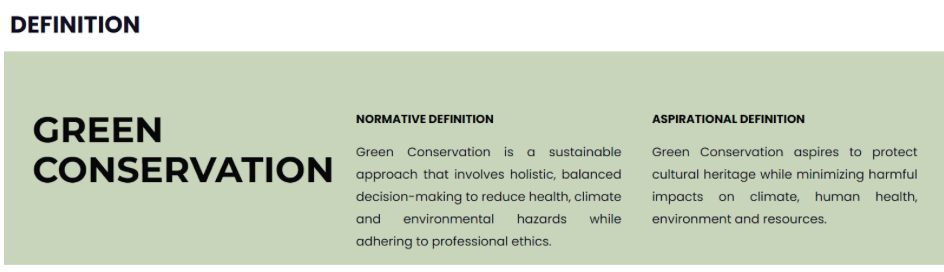
From there, Lorraine discussed environmental sustainability, highlighting how closely it connects with social and economic aspects. As a Carbon Literacy trainer, she explained that Carbon Literacy means understanding the carbon impact of our everyday choices, and knowing how to take action to reduce it. For conservators, that might mean being aware of how our materials, solvents, energy use, or travel contribute to emissions, and finding ways to reduce that footprint.
Even though conservation may not seem like a big polluter compared to other industries, Lorraine pointed out that our field does have a real, measurable environmental impact. Energy consumption, hazardous materials, waste, travel, and packaging all play a role. Through practical examples, she showed how changes in areas like energy efficiency, procurement, or travel habits can make a tangible difference. Lorraine also shared several helpful tools and strategies that can support more sustainable practice:
- Carbon Literacy training
- Sustainability rider (for contracts and project agreements)
- Environmental plan template
- Collaboration and communication across teams and institutions
- StiCH (Sustainability Tools in Cultural Heritage) carbon calculator
- Sustainability statement
The discussion that followed was especially engaging. Lorraine shared small but practical actions they’ve tried or would like to implement - like carpooling to work, reusing packaging, or asking suppliers to reduce plastic wrapping. It was inspiring to see how even minor adjustments in our routines can add up to meaningful change.
Key Takeaways from the webinar are:
- As conservators, we need to recognize our environmental impact and actively look for ways to reduce it.
- Small steps matter. From shared travel to rethinking packaging and lighting systems.
- Embedding sustainability into contracts, planning, and daily work helps turn good intentions into lasting habits.
- Collaboration and knowledge sharing, both locally and internationally, are essential for progress.
This first webinar was a great success and an encouraging start for the Sustainability Working Group. It opened up thoughtful conversations about how conservation and climate action intersect. Lorraine Finch offered not just inspiration, but concrete tools for making our profession more sustainable.
The Working Group looks forward to continuing this journey, hosting more webinars, and building a strong community of conservators who care about shaping a greener, more sustainable future for our field.