Sustainable Perspectives for Greener Practices: Reflections on Gwendoline Fife’s IIC Book Club Talk
Anežka Šebestová
The second IIC Book Club event welcomed conservator Gwendoline Fife, Director of the Greener Solvents Project, for an online talk exploring sustainability in conservation. This talk followed an earlier session in which Annabel Keenan introduced her book Climate Action in the Art World: Towards a Greener Future. Both Fife and Keenan participated in the discussion, moderated by Alexandra Taylor, a Board Member of Restauratoren Nederland.
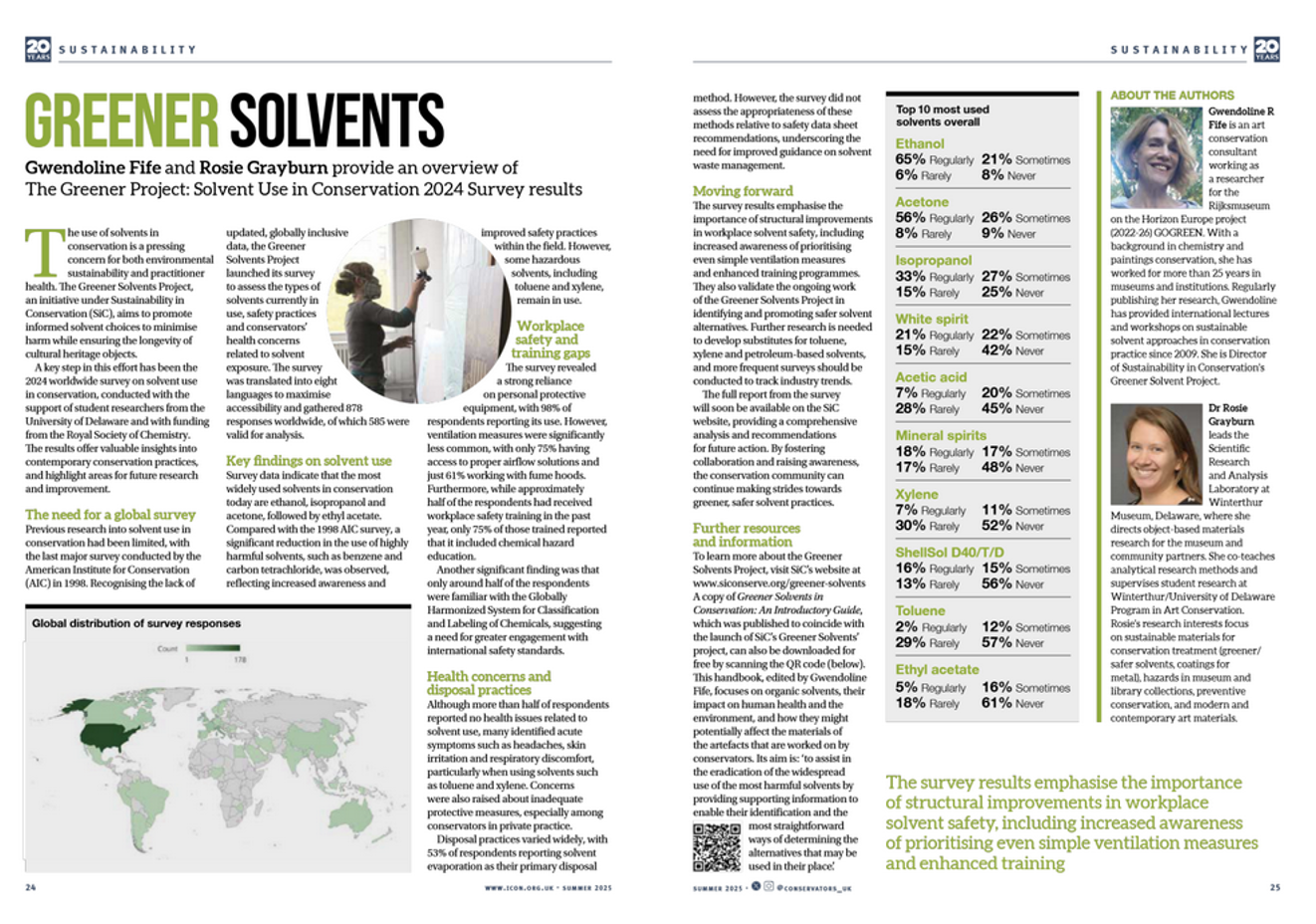
One of the main messages was that no conservation approach is entirely green. Choosing a greener alternative requires more than replacing one material with another. Conservators need to consider the effects of their choices on human health and the environment, including energy consumption, water and other resources, and waste. GoGreen brings these considerations together in its 14 Green Parameters, which also include the needs of the artwork and practical aspects of conservation. Every decision depends on the context, the materials involved and our current knowledge. Finding a balance between these different needs is essential.
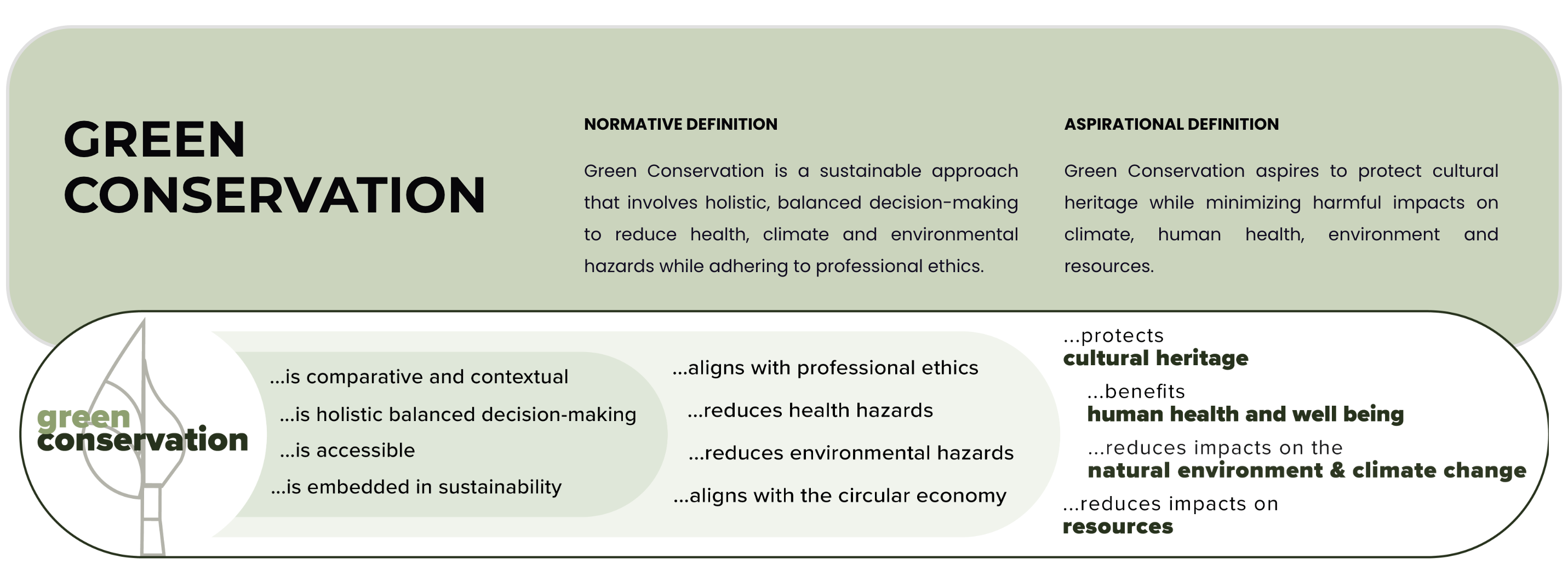
For me, the most interesting part was the discussion at the end. One question concerned the meaning of the term “green”. The word is used so often that it can be difficult to explain exactly what we mean by it. I found the speakers’ point about adaptability particularly interesting: an approach that cannot develop and adapt to a new situation or context is not sustainable.
The speakers also recommended resources for conservators interested in making their practice greener. Publications and tools are freely available on the GoGreen and Greener Solvents websites, and more resources are on the way. Keenan’s Climate Action in the Art World: Towards a Greener Future offers a broader view of sustainability in the art world.
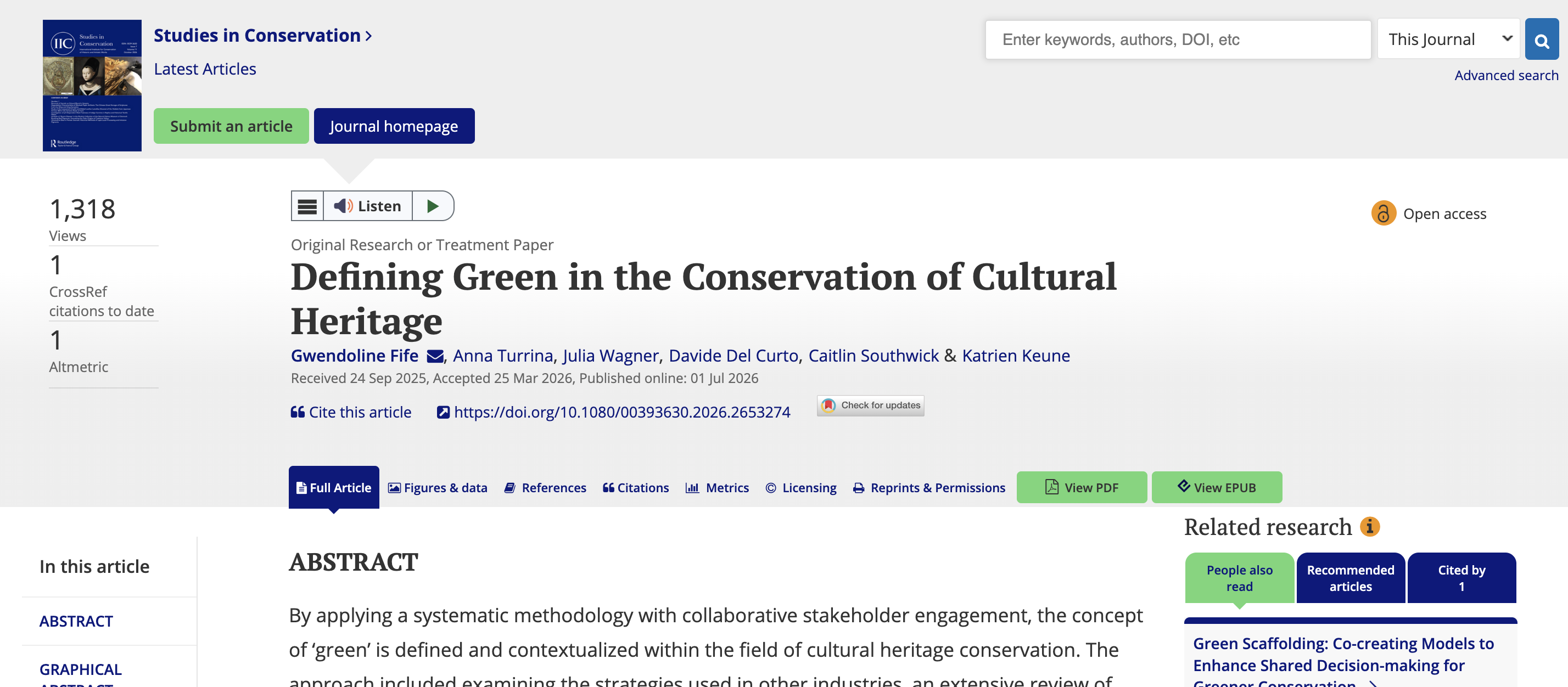
I left the discussion feeling encouraged. We may not be able to eliminate every environmental impact of our work, but we can make informed choices and keep improving our practice. Small changes matter, provided they remain appropriate and safe for the objects in our care. For me as an early-career conservator, this was a reassuring message: recognising our limitations should help us find realistic ways forward, rather than discourage us from taking action.
I enjoyed this evening of ideas and discussion, and I would be happy to join future IIC Book Club events. I would encourage others interested in these questions to take part too.